Leveling Kit vs. Lift Kit: What's the Difference?
Two of the most common questions we get at our Alvin, TX shop: "What's the difference between a leveling kit and a lift kit?" and "Which one do I need?" Here's the honest answer — no upsell.
The Short Version
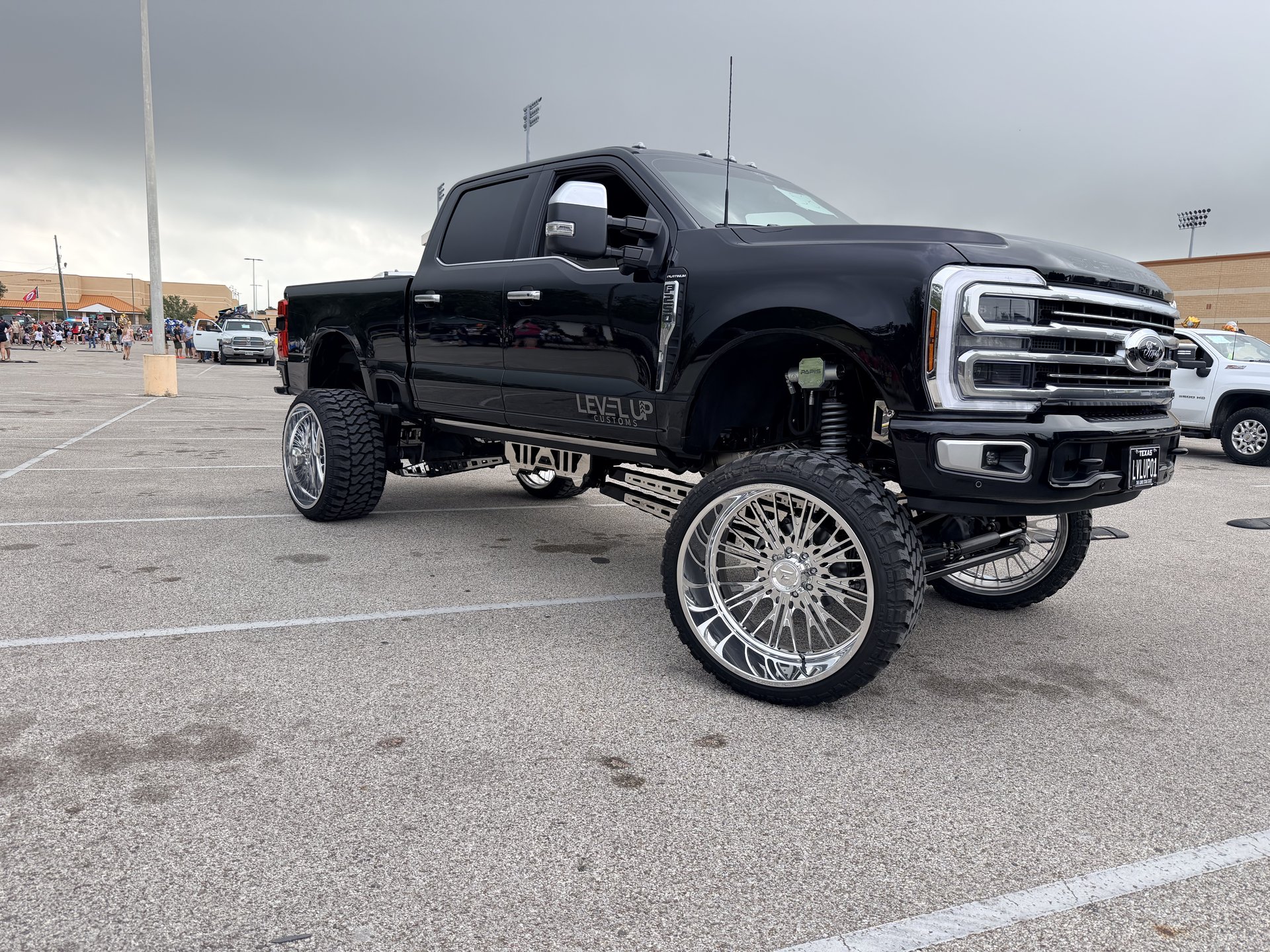
A leveling kit raises the front of your truck to match the rear, evening out the factory "nose-down" rake. It's small, affordable, and keeps things close to stock. A lift kit raises the whole truck — front and rear — for real ground clearance, bigger tires, and a more aggressive stance. It's a bigger job with more parts, more cost, and more payoff.
Neither is "better." They solve different problems. The right pick comes down to how much height you actually want, how big you're going on tires, and your budget for the whole package.
What a Leveling Kit Does
Most trucks leave the factory sitting lower in the front than the rear — that built-in rake is designed for towing and hauling. A leveling kit adds roughly 1.5" to 2.5" of height up front (usually with strut spacers or torsion keys) so the truck sits level front-to-back.
- Evens out the factory stance for a cleaner look
- Creates just enough clearance to fit slightly larger tires
- Keeps the ride quality close to stock
- Lower cost and a faster install than a full lift
If your goal is a level, finished look and room for a modestly bigger tire — without changing how the truck drives — a leveling kit is often all you need.
What a Lift Kit Does
A lift kit raises the entire vehicle for serious clearance and tire room. There are two main types, and the difference matters:
- Suspension lift — raises the truck by replacing or adding suspension components (control arms, springs, shocks, spacers). This is what gives you real off-road clearance and room for large tires. Common heights run 3" to 6"+ and up.
- Body lift — raises the body off the frame with spacers, adding height for tire clearance without changing suspension geometry. Usually smaller and often combined with other mods.
A lift is the move when you want an aggressive stance, big tires, and the ability to actually use the clearance — trails, mud, back roads. It's a larger investment because it touches more of the truck. We break down the specific brands and heights we install in our lift kit brands guide.
Side by Side
| Factor | Leveling Kit | Lift Kit |
|---|---|---|
| Height added | ~1.5"–2.5" (front) | 3"–6"+ (whole truck) |
| Main goal | Even stance, mild tire upsize | Clearance, big tires, aggressive look |
| Cost | Lower | Higher (more parts & labor) |
| Ride change | Minimal | Noticeable; depends on kit quality |
| Tire clearance | Slightly larger tires | Significantly larger tires |
| Alignment needed | Yes | Yes — and often more |
Which One Should You Get?
We start with three questions when a customer isn't sure:
- How much height do you actually want? If you just want the nose to stop dipping and a slightly bigger tire, level it. If you want to stand out and gain real clearance, lift it.
- How big are you going on tires? Tire size drives the decision more than anything. Bigger tires need more room, and past a certain size, a leveling kit won't cut it.
- What's the budget for the whole package? Not just the kit — the wheels, tires, alignment, and speedometer recalibration that come with it. We price the whole build so there are no surprises.
Don't Forget the Rest of the Package
Whichever route you go, a lift or level almost always pairs with new wheels and tires to fill the space and clear properly — plus an alignment and speedometer recalibration, which we include with every install. Planning the whole stance at once saves money and gets the fitment right the first time. See our Wheels & Tires page or our off-road tire guide to spec the rest.
We serve Alvin, Pearland, Friendswood, Manvel, League City, and the greater Houston area from our shop at 703 E. Hwy 6, Ste B in Alvin. Full sizing details are on our Lift Kits page.