Wheel Fitment 101: Offset, Backspacing, and Why It Matters
"Will these wheels fit my truck?" is the question we get more than any other. Offset and backspacing are the answer — here's what they actually mean before you buy online and find out the hard way.
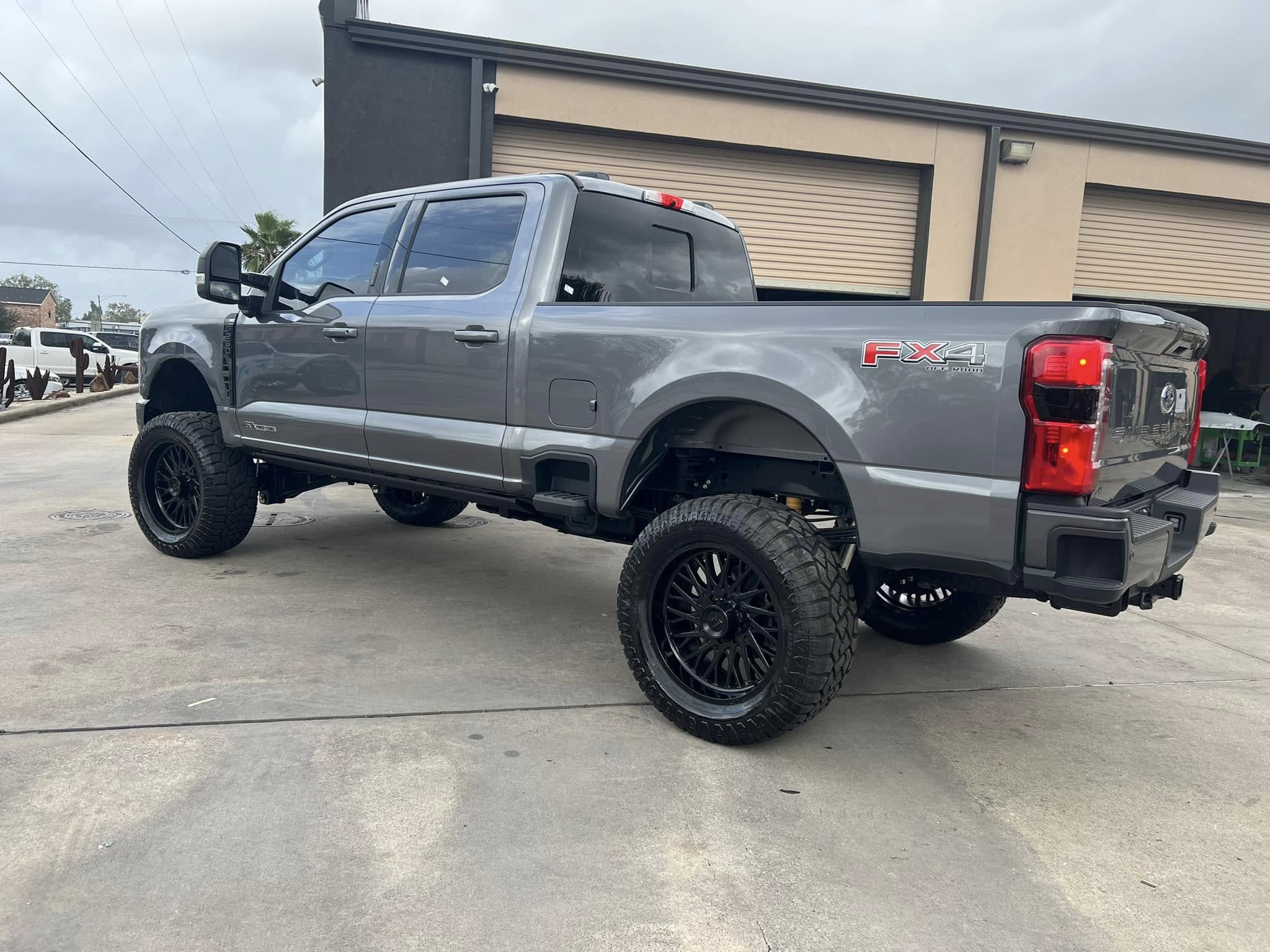
Why Fitment Trips People Up
Wheels that look identical online can behave completely differently once they're bolted to your truck. A wheel that's the right diameter and width can still rub the fender, hit the brake caliper, or throw off your bearings — all because of one number most people never check: offset. Get fitment wrong and you're either sending wheels back or grinding on fender liners to make it work. Get it right the first time and it's a non-issue.
Offset: The Number That Matters Most
Offset is the distance, in millimeters, between the wheel's true centerline and its mounting surface (where it bolts to the hub). It determines whether the wheel sits tucked in, flush, or poking out past the fender.
- Positive offset — mounting surface sits toward the outside (street side) of the wheel. Pulls the wheel in toward the truck. Common on factory and mild setups.
- Zero offset — mounting surface is at the true centerline.
- Negative offset — mounting surface sits toward the inside (brake side). Pushes the wheel out for a wider, more aggressive stance — the look most lifted-truck builds are going for.
The lower (more negative) the offset number, the further the wheel pokes out. Go too negative without enough lift or fender work and you're rubbing on turns, or worse, hitting suspension components.
Backspacing: The Other Half of the Equation
Backspacing measures from the back edge of the wheel (the mounting surface) to the inner lip — basically how far the wheel sits toward the engine/brakes side. Less backspacing pushes the wheel outward; more backspacing tucks it in. Offset and backspacing describe the same physical relationship from two different angles, but shops and manufacturers use both terms, so it's worth understanding each.
Bolt Pattern and Load Rating
Two more numbers that aren't optional to get right:
- Bolt pattern — the number of lug holes and the diameter of the circle they sit on (e.g. 6x135, 8x170). Wrong pattern means the wheel doesn't bolt on, full stop.
- Load rating — how much weight each wheel is rated to carry. This matters more on trucks than cars, especially if you tow or haul. A wheel that looks right but is under-rated for your truck's weight is a real safety issue, not a cosmetic one.
Fitment Changes With Your Suspension
Offset that clears fine on a stock truck can rub immediately on a lifted or leveled one — and vice versa, wheels specced for an aggressive poke won't look right on a stock ride height. That's why we always spec wheels alongside whatever's happening with your suspension. If you're also considering a lift or leveling kit, read our leveling kit vs. lift kit guide first — it changes what fitment actually makes sense.
Quick Reference
| Term | What It Controls | Get It Wrong And... |
|---|---|---|
| Offset | How far the wheel sits in or out | Rubs fender/suspension, or looks sunk-in |
| Backspacing | Same relationship, measured from the back | Same issues as bad offset |
| Bolt pattern | Whether it physically bolts on | Doesn't fit at all |
| Load rating | Max safe weight per wheel | Safety risk under load/towing |
The Easiest Way to Get It Right
Honestly — don't spec this yourself off a forum thread. Bring us your truck's info (or the truck itself) and tell us the look you're after, from tucked-and-clean to aggressive poke, and we'll spec wheels, tires, and any suspension work together as one package so it fits and looks right the first time. We serve Alvin, Pearland, Friendswood, Manvel, League City, and greater Houston from our shop at 703 E. Hwy 6, Ste B in Alvin. See our Wheels & Tires page for the brands we install.